
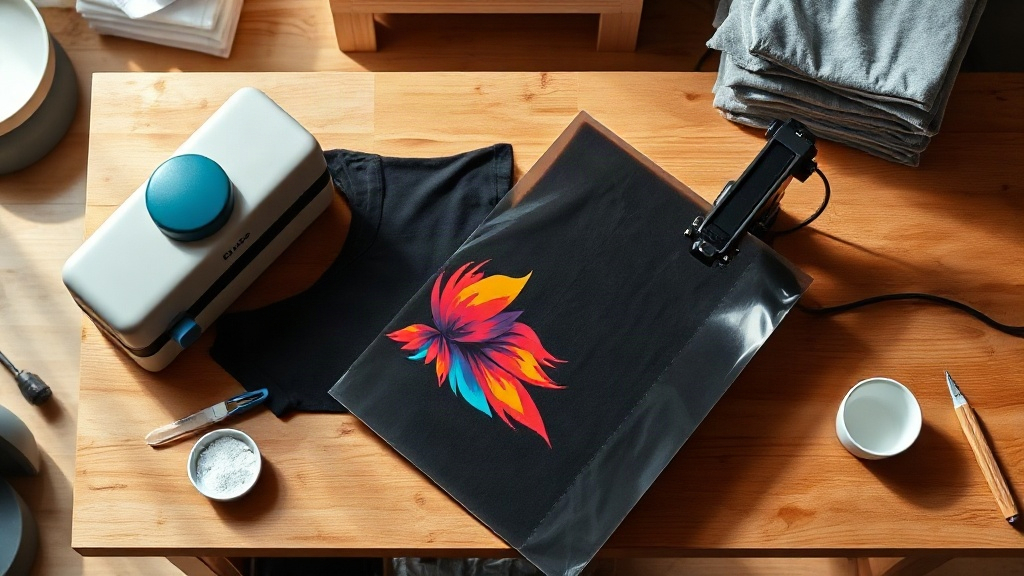
If you have spent any time around custom apparel, you have probably heard people talking about DTF transfers. Direct-to-film printing has moved from a niche technique to one of the most popular ways to decorate t-shirts, hoodies, and tote bags. The appeal is simple: you get bright, detailed prints on fabrics that used to be difficult to work with, and you do not need a warehouse of equipment to get started.
This guide walks through what DTF transfers actually are, how the pressing process works, which materials they suit, and the mistakes that trip up most beginners.
What Are DTF Transfers?
A DTF transfer is a printed sheet of film that carries a design made from special pigments and a thermoplastic adhesive powder. The design is printed onto a clear film, dusted with adhesive powder while the ink is still wet, and then cured. When you are ready to apply it, you place the film on your garment, press it with heat, and peel the film away. The ink and adhesive stay behind, bonded to the fabric.
The result is a soft, stretchy print that holds fine detail well. Gradients, photographs, and thin lines all reproduce cleanly, which is why DTF has become a go-to for complex artwork that screen printing struggles with.
How It Differs from Vinyl and DTG
Heat transfer vinyl requires you to cut each color separately and layer them. Direct-to-garment printing sprays ink straight onto the shirt, which usually limits you to cotton. DTF transfers sit in a useful middle ground: full-color artwork in one piece, no weeding, and compatibility with a much wider range of fabrics.
Why DTF Transfers Have Become So Popular
There are a few practical reasons this method took off so quickly.
- Fabric flexibility. Polyester, cotton, blends, nylon, canvas, and even some leathers accept DTF prints well.
- Color range. White ink is printed as a base layer, so bright designs show up on dark garments without extra steps.
- No setup cost per color. Unlike screen printing, adding colors to a design does not add cost or time.
- Storage. Cured transfers keep for months if stored away from heat and moisture, so you can press on demand.
For small businesses and hobbyists, that combination means you can offer a wide catalog without investing in multiple production methods.
How to Apply DTF Transfers Correctly
Application is straightforward, but small details decide whether a print lasts five washes or fifty. Here is a reliable process.
Step 1: Prepare the Garment
Pre-press the shirt for a few seconds to remove moisture and wrinkles. Fabric that is damp or creased will not give you an even bond.
Step 2: Position the Transfer
Place the film with the printed side facing down against the fabric. The clear carrier film should be on top. Use the corners of the film to align the design before you commit to the press.
Step 3: Press with Consistent Heat and Pressure
Most films call for around 300 to 320 degrees Fahrenheit for 10 to 15 seconds with medium to firm pressure. Follow the instructions that come with your specific film, because formulations vary. A heat press gives far more consistent results than an iron, which rarely delivers even pressure across a large design.
Step 4: Peel and Finish
Peel the film while it is still warm or after it cools, depending on your film type. Then press the garment a second time for a few seconds with a cover sheet. This final press smooths the print and improves wash durability.
Common Mistakes and How to Avoid Them
Most failed DTF transfers come down to a handful of avoidable issues.
- Not enough pressure. If the print lifts at the edges after washing, pressure is usually the culprit.
- Wrong temperature. Too cool and the adhesive will not activate; too hot and the film can scorch or distort.
- Skipping the pre-press. Moisture trapped in the fabric turns to steam and interferes with the bond.
- Peeling at the wrong time. Cold peel films peeled hot can smear; hot peel films peeled cold can leave adhesive behind.
- Poor storage. Transfers left in a hot car or a humid room will not perform as expected.
Choosing the Right DTF Film
Not all film behaves the same way. Double-sided matte film is a common choice for detailed artwork because it releases cleanly. Glossy film can suit bold, simple shapes. Thicker films tend to feel heavier on the garment, while thinner films give a softer hand feel but demand more careful handling during printing.
If you are buying transfers rather than printing your own, ask the supplier what film and powder they use. A shop that can explain its process is usually a shop that produces consistent output.
How DTF Prints Hold Up Over Time
A properly applied DTF print will typically outlast the garment it is on. Wash the item inside out in cold water, avoid fabric softener directly on the print, and tumble dry on low or hang dry. Following those habits, most prints stay vivid for the life of the shirt.
Frequently Asked Questions
Can DTF transfers be applied to 100% polyester?
Yes, and this is one of the biggest advantages of the method. Polyester and polyester blends accept DTF prints well, though you should lower the press temperature slightly and test on a scrap piece first, since polyester can scorch at high heat.
How long do unused DTF transfers last?
Stored in a cool, dry place away from direct sunlight, cured transfers generally keep for six months or more. Humidity is the main enemy, so keep them sealed until you are ready to press.
Do DTF transfers work on dark shirts?
They do. The printer lays down a white ink base before the color layers, which is why bright and light-colored designs show up clearly on black, navy, and other dark fabrics.
Is a heat press required, or can I use an iron?
An iron can work for small designs in a pinch, but it rarely provides even pressure and consistent temperature. For anything you plan to sell or wear regularly, a heat press gives noticeably better and longer-lasting results.
Can I stretch a garment after printing?
DTF prints are fairly elastic and handle normal wear well. Very thin fabrics stretched hard at the print edge may eventually crack, so sizing the design to allow a small border helps.
Once you understand the basics of heat, pressure, and timing, DTF transfers become one of the most forgiving and versatile decoration methods available. Start with a few test presses on scrap fabric, dial in your settings, and you will be producing shop-quality apparel in no time.