
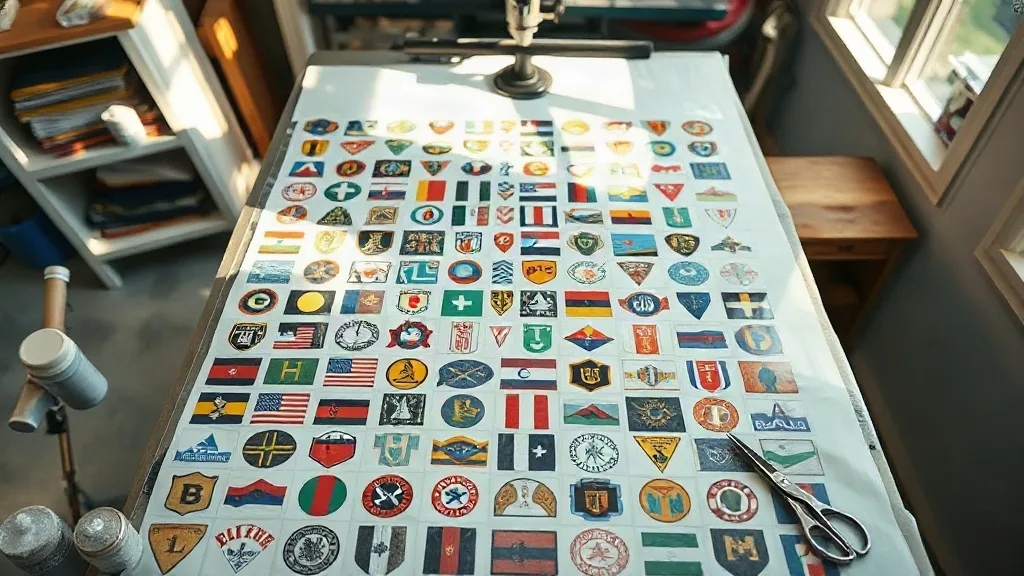
Walk into any small patch shop and you will hear the same complaint: short runs eat the profit. Setting up a screen or cutting vinyl for twelve pieces rarely pays for itself. That is exactly where a DTF Gangsheet earns its place. It packs many individual designs onto a single sheet of transfer film, so one pass through the printer and one press cycle can cover an entire week of small orders. For patch makers who handle mixed quantities, this changes the math on what is worth accepting.
What a DTF Gangsheet Really Is
Direct-to-film printing works by jetting pigment ink onto a coated PET film, then dusting the wet ink with a hot-melt adhesive powder. Once cured, the printed image becomes a transfer you can press onto fabric. A gangsheet is simply the practice of arranging many separate images on one large film sheet before printing, rather than sending each job through alone.
The concept is not new. Vinyl cutters and screen printers have nested jobs for decades. What makes DTF different is that there is no screen, no stencil, and no color separation. Each design on the sheet keeps full color, gradients, and fine detail, and the only cost difference between one image and forty is the length of film you consume.
Film, Powder, and Press: The Three Variables
Most quality problems trace back to one of three things. The film must be the correct side up and free of dust. The powder must be applied evenly and shaken off thoroughly before curing. The press must deliver consistent heat through the whole transfer. Get those three right and a gangsheet behaves predictably; get one wrong and you will see cracking, patchy adhesion, or a plastic feel that customers notice immediately.
Why Patch Makers Should Care
Custom patches sit in an awkward spot. Orders are often small, designs vary, and buyers expect quick turnaround. Traditional embroidered patches handle small runs well but cannot reproduce photographic detail or fine gradients. Woven patches offer crisp edges but require setup that only makes sense at higher volumes. Printed fabric patches bridge the gap, and DTF is the most accessible way to produce them without owning a dedicated textile printer.
- One setup covers many orders. A sheet can hold logos for five different clients at once, so the fixed cost of a print run is shared.
- No minimum color count. Full-color artwork costs the same as one-color artwork.
- Fast reprints. Keep the saved layout file and rerun it whenever stock runs low.
- Easy personalization. Names, numbers, and small variations can be dropped in without restarting production.
Building a Sheet That Prints Cleanly
The layout stage decides how much film you waste. A few habits separate a tight sheet from a sloppy one.
Leave Real Gaps Between Designs
Packed too tightly, designs bleed into each other during powdering, and cutting becomes a guessing game. A gap of roughly five to eight millimeters is a practical starting point for most patch work. If your patches will be cut with a contour, leave extra room for the cut path itself.
Group by Color and by Customer
Grouping similar colors close together makes visual inspection faster. Grouping by customer makes packing faster. When a sheet carries work for multiple buyers, add a small identifying mark in the margin, not on the design itself, so nothing gets mixed up at the trim table.
Mind the Grain and the Edge
Most film has a coated side that accepts ink and a matte back that does not. Loading it backwards wastes a full sheet and a powder application. Keep the printable edge orientation consistent across every job so the operator never has to think about it under time pressure.
Press Settings That Hold Up on Patches
Patches are usually pressed onto a carrier fabric and then sewn or heat-sealed onto the final garment. That means the transfer must survive handling, folding, and a second heat cycle. A few adjustments help.
- Pre-press the patch fabric for a few seconds to remove moisture.
- Press the transfer at a moderate temperature with firm, even pressure; too hot and the film curls, too cool and the adhesive never fully activates.
- Peel cool for a matte, fabric-like finish, or warm for a slightly glossier surface.
- Post-press briefly with a cover sheet to settle the edges.
Exact numbers vary by film brand and press, so run a small test strip before committing a full sheet. Write your winning settings on a card taped to the press. It sounds trivial until three people share the same machine.
Costing a Gangsheet Honestly
The tempting pitch is that gangsheets slash costs. They do reduce waste, but the savings come from utilization, not from magic. A sheet that is sixty percent full costs nearly the same to print as one that is ninety-five percent full. The discipline is in filling it.
Track three figures: film cost per square meter, powder consumption per sheet, and labor minutes per finished patch. Most shops find labor, not materials, is the largest line item on small patch orders. Batching cutting and trimming into a single session after a sheet comes off the press cuts that number noticeably.
Where DTF Fits and Where It Does Not
DTF printed patches shine on detail: photographic logos, soft gradients, fine type, and multicolor crests that would need many thread changes on an embroidery machine. They are also strong for merchandise, event badges, and prototype runs where a client wants to see a design on fabric before committing to a larger order.
They are less suited to patches that need a raised, textured hand feel or that will face heavy abrasion, such as workwear knee patches. For those, embroidery or a woven construction still wins. Being honest about that boundary builds more trust than overselling a single method.
Common Mistakes Worth Avoiding
New operators tend to over-powder, under-cure, and press too hot, all in the same afternoon. Excess powder leaves a stiff, chalky residue around the design. Under-curing means the adhesive washes away after a few cycles. Overheating shrinks the film and distorts small text.
Another frequent slip is forgetting to mirror the artwork. DTF transfers are pressed face down, so anything with readable text must be flipped before printing. A mirrored logo on a hundred patches is an expensive lesson that only needs to happen once.
Frequently Asked Questions
Can I mix different patch designs on one DTF gangsheet?
Yes, and that is the main advantage. Different designs, sizes, and customers can share a sheet as long as you leave adequate spacing and keep track of which piece belongs to which order. Save the layout file so reprints stay identical.
How long does a printed gangsheet last before I press it?
Cured transfers store well in a cool, dry place away from direct sunlight, typically for several months. Keep them flat or rolled loosely, never folded sharply, since creases can transfer into the final patch.
Do DTF patches work on nylon or waterproof fabrics?
They can, but those fabrics need extra care. Moisture and low surface energy interfere with adhesion, so pre-press thoroughly and test a sample before running a full order. Some coated fabrics simply will not hold a heat transfer well.
Is a gangsheet cheaper than ordering individual transfers?
Usually yes, because you pay for film area rather than per design. The savings grow with how well you fill the sheet, so plan layouts to minimize empty space.
What resolution should patch artwork be?
Aim for at least 300 DPI at final print size. Vector files are ideal for logos and text. Low-resolution images will look soft on fabric no matter how carefully you press them.