
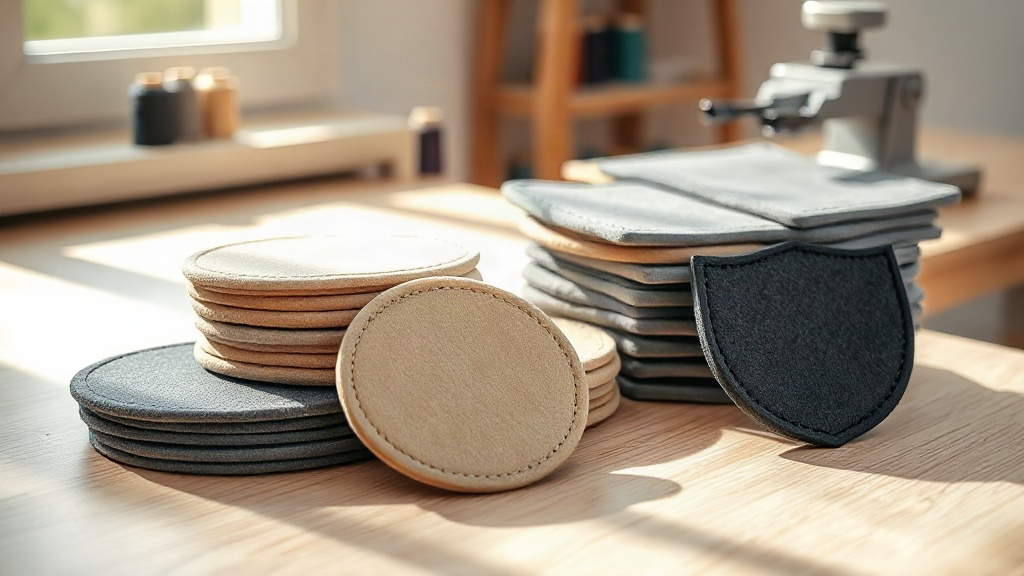
When you order custom patches, the difference between a good result and a great one often comes down to the foundation: the blank. In the patch industry, smart blanks are pre-engineered base materials that streamline production, reduce waste, and ensure your final design looks exactly as intended. Whether you are a small business owner ordering promotional patches or a designer creating intricate embroidered pieces, understanding smart blanks can save you time, money, and frustration.
What Are Smart Blanks?
Smart blanks are specially prepared patch bases that come ready for customization. Unlike traditional blank patches, which may require additional preparation such as cutting, stabilizing, or pre-treating, smart blanks are manufactured with precision to meet specific production standards. They often include features like pre-applied adhesive backing, laser-cut edges, or reinforced stitching areas that make the customization process smoother.
The term "smart" refers to the intelligent design behind these blanks. They are engineered to work seamlessly with modern embroidery machines, heat presses, and digital printing equipment. This means less manual adjustment, fewer errors, and a more consistent output across large orders.
Key Characteristics of Smart Blanks
- Precision cut: Edges are cleanly cut to exact dimensions, eliminating fraying and ensuring uniform shapes.
- Material consistency: Each blank is made from high-quality fabrics like twill, felt, or canvas that hold stitches well.
- Compatibility: Designed to work with common backing options, including iron-on, sew-on, and Velcro.
- Time-saving: Ready to use out of the box, reducing prep time and labor costs.
Why Smart Blanks Matter for Custom Patches
If you have ever ordered patches in bulk, you know that inconsistencies can ruin the entire batch. Smart blanks address this by providing a standardized base that minimizes variations. For businesses, this translates to a professional, cohesive look across uniforms, merchandise, or promotional items. For individuals, it means your one-of-a-kind design gets the best possible canvas.
Moreover, smart blanks are often more durable. Because they are engineered for specific applications, they resist common issues like puckering, shrinking, or distorting during the embroidery or printing process. This durability extends the life of the patch, making it a worthwhile investment.
Cost-Effectiveness in the Long Run
While smart blanks may have a slightly higher upfront cost compared to basic blanks, they save money by reducing waste and rework. When you factor in the time saved on labor and the lower risk of defective patches, the overall cost per patch often decreases. This is especially true for large orders where even a small percentage of errors can add up.
How to Choose the Right Smart Blank for Your Project
Selecting the right smart blank depends on several factors, including the intended use, design complexity, and application method. Here are some guidelines to help you decide.
1. Consider the Fabric
The fabric of the blank affects how your design looks and feels. Twill is a popular choice for embroidered patches because it is durable and provides a smooth surface. Felt is softer and often used for vintage-style patches. Canvas offers a rugged, textured look. For digital printing, polyester blends are common because they hold ink well.
2. Determine the Backing
Smart blanks come with various backing options. Iron-on backing is convenient for quick application but may not be permanent for heavy-use items. Sew-on backing is the most secure and is ideal for uniforms or jackets. Velcro backing allows for easy swapping, perfect for tactical gear or interchangeable displays. Peel-and-stick adhesive is great for temporary use.
3. Match the Shape and Size
Smart blanks are available in standard shapes like circles, squares, and rectangles, as well as custom shapes. Choose a shape that complements your design. For example, a circular blank works well for logos, while a shield shape might suit a sports team emblem. Ensure the size is appropriate for the level of detail in your design; overly small patches can make intricate details hard to read.
4. Evaluate the Edge Finish
The edge finish can be a merrowed border (a thick, rounded edge), a laser-cut clean edge, or a heat-sealed edge. Merrowed edges are classic for embroidered patches and add durability. Laser-cut edges offer a modern, precise look. Heat-sealed edges prevent fraying on printed patches. Consider the overall aesthetic you want to achieve.
Designing for Smart Blanks: Best Practices
Creating a design for smart blanks requires some forethought to ensure the final patch looks sharp and professional. Here are some tips from experienced patch makers.
- Keep it simple: Avoid overly complex designs with tiny details. Embroidery, in particular, has limitations on how small text and fine lines can be. Bold, clear elements work best.
- Use high-contrast colors: Ensure your design stands out against the blank's background color. If the blank is dark, use light colors for the design, and vice versa.
- Think about stitch direction: For embroidered patches, the direction of stitches can affect the texture and appearance. Discuss with your manufacturer if you have specific requirements.
- Test with a proof: Always request a digital proof or a physical sample before committing to a large order. This allows you to catch any issues early.
Applications of Smart Blanks Across Industries
Smart blanks are used in a wide range of industries, each with its own requirements.
Corporate Branding
Companies use custom patches on uniforms, hats, and bags to reinforce brand identity. Smart blanks ensure that every patch is consistent, which is crucial for a professional image.
Sports Teams
Sports teams often order patches for jerseys, jackets, and gear. Smart blanks withstand the wear and tear of active use and can be produced in large quantities quickly.
Military and Tactical
In military and tactical settings, patches are used for identification, morale, and unit insignia. Smart blanks with Velcro backing are popular for easy attachment and removal.
Fashion and Accessories
Designers incorporate patches into clothing, bags, and accessories to add a unique flair. Smart blanks allow for creative freedom without compromising on quality.
Ordering Smart Blanks: A Step-by-Step Guide
Ready to order? Follow these steps to ensure a smooth experience.
- Define your requirements: Determine the quantity, size, shape, fabric, backing, and edge finish.
- Choose a reputable supplier: Look for suppliers who specialize in smart blanks and have good reviews. Patches Prime is a trusted source for high-quality custom patches and blanks.
- Request a quote: Provide your specifications and ask for a detailed quote, including any setup fees.
- Approve a proof: Review the digital proof carefully and request a physical sample if needed.
- Place your order: Once satisfied, place your order and confirm the production timeline.
- Inspect upon delivery: Check the patches for quality and accuracy as soon as they arrive.
Common Mistakes to Avoid with Smart Blanks
Even with the best materials, mistakes can happen. Here are some pitfalls to watch out for.
- Ignoring the fabric's limitations: Not all fabrics work well with all decoration methods. For example, some synthetic fabrics may melt under high heat.
- Overlooking the backing: Choosing the wrong backing can lead to patches falling off or being difficult to apply.
- Poor color choices: Low contrast between the design and the blank can make the patch look muddy.
- Skipping the proof: Always review a proof to avoid costly errors.
Frequently Asked Questions About Smart Blanks
What exactly are smart blanks and how do they differ from regular blanks?
Smart blanks are pre-prepared patch bases engineered for efficiency and consistency. Unlike regular blanks, they often come with precision-cut edges, pre-applied adhesives, or reinforced areas, making them ready for immediate customization without additional prep work.
Can I use smart blanks for both embroidered and printed patches?
Yes, smart blanks are available for various decoration methods. However, you need to choose the right blank material for your method. For embroidery, twill or felt blanks are ideal. For printing, polyester or canvas blanks work best.
How do I ensure my design will look good on a smart blank?
Keep your design simple and high-contrast. Avoid tiny details and thin lines. Always request a digital proof or a physical sample to see how your design translates onto the blank before mass production.
Are smart blanks more expensive than traditional blanks?
They may have a slightly higher unit cost, but they often save money overall by reducing waste, labor, and rework. For large orders, the cost-effectiveness is even more pronounced.
Where can I buy high-quality smart blanks?
Look for reputable suppliers like Patches Prime that specialize in custom patches and smart blanks. They offer a range of options and can guide you through the selection process.
By understanding and utilizing smart blanks, you can elevate the quality of your custom patches and streamline your production process. Whether you are a business, a team, or an individual, the right smart blank makes all the difference.